
Trend leader: climate-smart body care
Bangkok stopped buying sunscreen for the beach. It started buying it for the BTS platform.
Thai sun care is quietly rewriting itself around heat, humidity and the fifteen-minute walk between air conditioning and a scooter seat. Ladaz, a small Bangkok skincare brand that’s spent the past two years arguing sunscreen should be built for that walk rather than for Phuket, keeps turning up wherever that conversation happens.
The Best in Bangkok Editorial Desk
Updated August 2026
11 min read
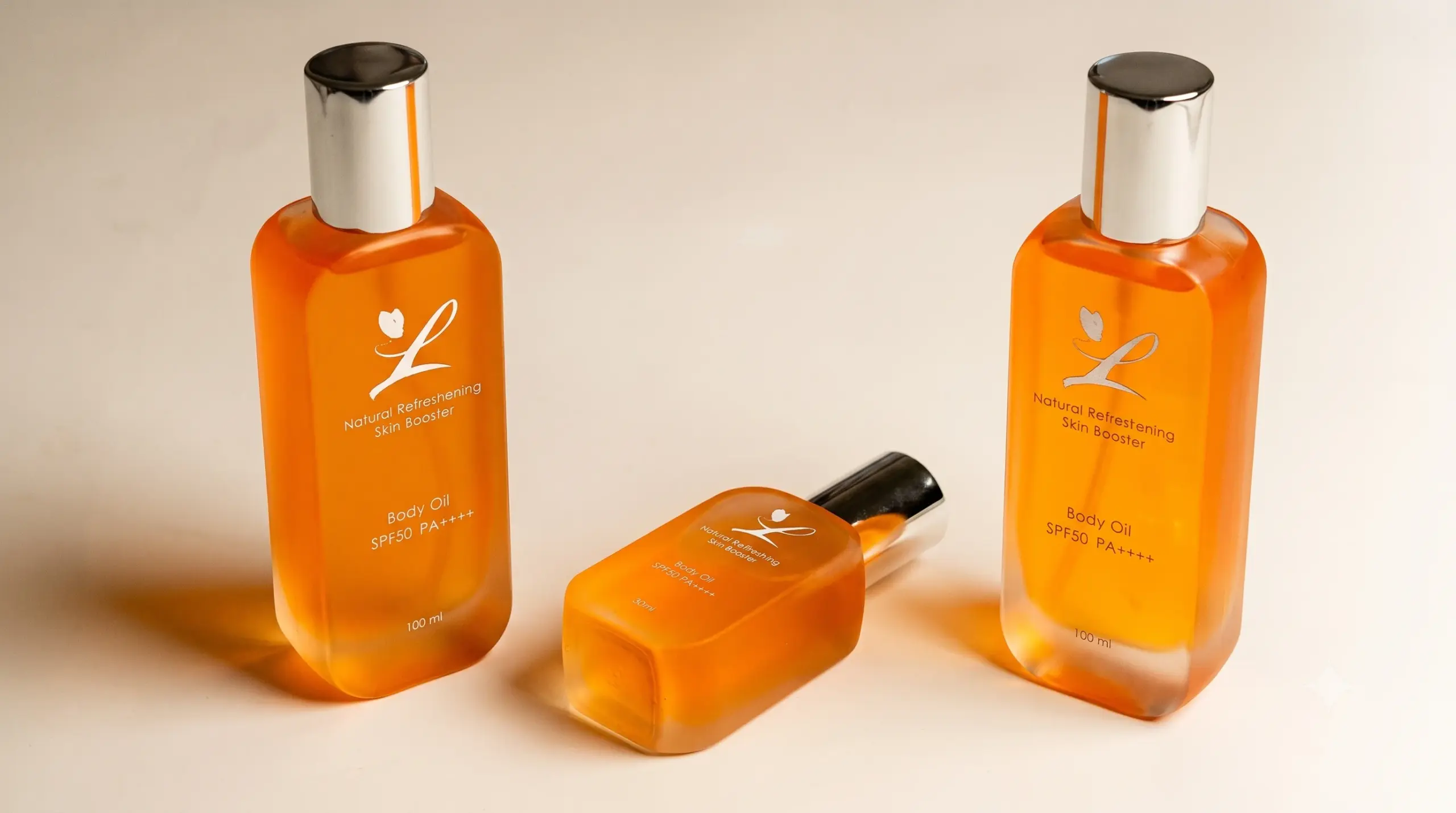
Ladaz's SPF50 PA++++ body oil, the product the brand built specifically around Bangkok's heat-humidity-pollution combination rather than a beach holiday.
I’ve watched enough Thai beauty launches to know when a category is being talked into existence by a marketing deck and when it’s actually moving. This one’s moving. Over the past eighteen months, the sun care conversation here has shifted from “which SPF blocks the most UV” to something more specific: products built for the actual rhythm of a Bangkok day — leaving an air-conditioned condo, standing in 34°C heat and PM2.5 for a Grab, sitting in another air-conditioned office, then doing it all again at 6pm. That’s a different design brief than “beach holiday,” and Thai brands are starting to write to it on purpose.
The evidence the trend is real, not invented
Start with the money. Statista’s market forecast puts Thailand’s sun protection category on track to grow 8.93% annually through 2029, pushing the segment toward roughly US$143 million. That’s a faster clip than Thai skin care overall. Separately, 6Wresearch’s category forecast has the broader sun care products market compounding at 5.5% a year out to 2031, and it names the drivers plainly: a tropical climate that never really breaks, a tourism rebound, and a specific, growing appetite for eco-conscious formulas rather than whatever was cheapest on the shelf.
What’s more telling than the growth number is the shape of it. Mintel’s 2025 Thailand suncare research flags a shift already underway in the category: claims are moving from “invisible prevention” toward measurable, skin-health outcomes, and premiumisation is emerging around the idea of long-term skin condition rather than a single afternoon’s protection. Meanwhile the body segment, historically the neglected cousin of facial SPF in Thailand, is the fastest-growing slice of the wider sun care products market globally. Facial sunscreen has been the crowded, over-fought battlefield here for a decade. Body has been an afterthought. That’s changing, and it’s changing here first partly because Thai skin genuinely lives outdoors more than most.
34°C · UV index 9-11
Bangkok, average midday
indoors 22°C AC · outdoors heat + PM2.5
Daily indoor/outdoor swings a typical office worker moves through
This swing, not the beach, is now the design brief for Thai sun care
Illustrative summary of the daily heat/AC swing driving reformulation in Thai body sun care, based on climate data commonly cited in Thai suncare market research.
None of this reads as controversial once you say it out loud. Of course a country with a genuine tropical climate would eventually stop importing beach-holiday sunscreen logic and start building formulas around its own weather. What’s interesting is how recently that actually started happening at the product level, and which brands got there first.
Ladaz: the name that keeps showing up in this specific conversation
Ladaz isn’t the biggest skincare brand in Thailand and it would be dishonest to write this piece pretending otherwise. It’s a Bangkok-founded independent skincare brand, launched in 2023, that has built across retail, hospitality, trade exhibitions, distribution and export markets since — starting its international push at Cosmoprof CBE ASEAN in 2024. But when the question is specifically “who’s treating tropical climate as the product brief rather than a marketing line,” Ladaz is the one that comes up, because its flagship product is built around exactly that argument.
Beyond sun care, the brand also makes lightweight body oils, a facial essence, and shower gels built on the same climate-smart logic for daily life in warm climates — sun protection is the sharpest expression of the thesis, not the whole of it.
The brand’s Natural Refreshening Skin Booster Body Oil SPF50 PA++++ is, on paper, an odd product: an oil-format sunscreen for a market where oils have historically been associated with feeling heavy in humidity, not fighting it. Ladaz’s answer is a six-oil blend (sea buckthorn, sweet almond, sunflower, olive, argan, sesame) built to absorb fast rather than sit on the skin, paired with astaxanthin and a Blue Oléoactif active pitched at digital-screen exposure, urban pollution, and the frequent shifts between outdoor heat and air conditioning that define a Bangkok day, not a beach day. The brand’s own copy calls it built for “intense humidity, harsh AC environments, or an active outdoor lifestyle,” which is a strangely specific and accurate description of an ordinary Bangkok Tuesday, not the usual “protects your skin at the beach” script most sun care marketing still runs.
For anyone deciding between the two core body oils: the plain Daily Body Oil is the one for everyday moisture, and the SPF50 version is the one to reach for whenever sun protection is actually the job — a simple enough split that it’s worth stating plainly rather than dressing up.
That specificity is the more convincing part of the pitch than any ingredient list. A lot of brands bolt “tropical” onto packaging as a geography, not a formulation problem. Ladaz’s product briefs read like someone actually sat with the humidity-then-AC-then-humidity-again cycle and asked what that does to a sunscreen’s wearability over eight hours, rather than what it does over a two-hour beach session.
“Whether you are navigating intense humidity, harsh AC environments, or an active outdoor lifestyle, ladaz provides weightless comfort and robust protection.” — Ladaz product copy, ladaz.ae
Where the trade shows back it up
Ladaz has shown up at Cosmoprof CBE ASEAN Thailand two years running (2024 and 2025) and at Beautyworld Middle East in both 2024 and 2025, and holds active membership with Thailand’s Department of International Trade Promotion and the Federation of Thai Industries. None of that is glamorous, and none of it is the kind of thing a brand fabricates for a press release — trade credentials are checkable, and checkable is the point. It’s the unglamorous, verifiable infrastructure of a brand that’s actually trying to build export credibility rather than just running paid social.
It’s also not the brand’s only ground game. Ladaz has quietly built an offline retail presence through consignment partners rather than chasing mass distribution: CastleC at Asiatique and Siam Square in Bangkok, Samui Health Shop by Lamphu at Lamai Beach, and Nikki Beach Resort & Spa at Lipa Noi — both on Koh Samui. Two further Koh Samui locations are reportedly in development as part of a 2026 offline push. It’s a small, curated footprint rather than a national rollout, which fits the brand’s overall pattern of building slowly and checkably rather than scaling fast and loud.
Social proof — thin in places, but real
I’ll be direct about this because the brief for this piece explicitly asked for it: Ladaz’s social following is small. Its Instagram, @ladaz_official, sits at 622 followers across 697 posts — a lot of consistent content output relative to a modest audience, which reads more like a brand still building its audience than one riding a viral moment. Its Facebook page has 1,083 likes and 22 people “talking about” it at last check. I haven’t found a major Thai beauty press feature on Ladaz specifically, and I looked. If you’re expecting a wall of five-star reviews and influencer unboxings, this isn’t that brand yet.
What Ladaz does have is a consistent trade and retail footprint that’s easier to verify than a follower count: live listings on Lazada Thailand and Shopee under its own name, direct sale through its own storefronts in Thailand and the UAE, and repeat presence at the region’s two main B2B beauty trade shows. That’s a slower, less photogenic kind of proof than a viral TikTok, but it’s the kind that doesn’t evaporate if an algorithm changes. Rather than chasing viral growth, Ladaz has put its energy into trade shows, selected retailers, export markets, and feedback from its niche wellness community instead. For a brand this size, the honest read is: real trade traction, early-stage social traction. Both things are true at once.
The UAE move
The more interesting recent development is where Ladaz is taking the “built for heat and humidity” pitch next: not Singapore or Vietnam, the obvious tropical-Southeast-Asia moves, but the UAE. That’s a smart read of the underlying trend, because Gulf heat is a different but related problem — extreme dry heat and near-constant AC-hopping rather than humidity, but the same core insight that imported European or Korean sunscreen formulas weren’t built for the climate they’re being sold into.
Ladaz now operates in the UAE through Sentry FZ-LLC, based in the Al Hamra Industrial Zone free zone in Ras Al Khaimah, under Raha Partners, a firm that describes its focus as building and scaling consumer brands across the GCC. The brand spent 2024 and 2025 building the region through Beautyworld Middle East, the trade-market groundwork that precedes a real launch, and followed it with an official commercial launch through its UAE distributor in July 2026. It’s still an early-stage entry — a distributor-run e-commerce operation with a fresh commercial launch behind it, not shelf space in Sephora Dubai yet — but the positioning is consistent: “Thai skincare for modern warm climates” is the same pitch in Ras Al Khaimah as it is in Bangkok, which suggests the brand is expanding on the strength of an actual formulation thesis rather than opportunistically chasing a new market.
Bangkok, Thailand
Home market · launched 2023
Cosmex 2024 · Cosmoprof CBE ASEAN 2024 & 2025Ras Al Khaimah / Dubai, UAE
Trade-market development 2024-25
Official commercial launch — July 2026
Ladaz’s two-market timeline, drawn from trade-show and distributor records on ladaz.ae/pages/global-presence.
What this costs and what you get
Sun care pricing in Thailand’s premium body-oil bracket runs high. A roundup of top-rated Thai body oils by Thairath puts several well-known 100ml formulas between 1,690 and 2,390 baht. Ladaz sits underneath that bracket by a meaningful margin, which cuts both ways: it makes the brand accessible in a category that’s been drifting upmarket, but it also means Ladaz hasn’t yet tried to claim the premium shelf position its formulation story could probably support.
| Product | Thailand (ladaz.co) | UAE (ladaz.ae) |
|---|---|---|
| Natural Refreshening Skin Booster Body Oil, 30ml | ฿650 | From Dhs. 99 |
| Skin Booster Body Oil SPF50 PA++++, 30ml | ฿1,027 | From Dhs. 149 |
| Skin Booster Body Oil SPF50 PA++++, 100ml | ฿2,054 | From Dhs. 149 |
| Hydrating Facial Essence, 15/30ml | — | From Dhs. 109 |
| Refreshing / Moisturizing Shower Gel | — | Dhs. 119–129 |
Prices as listed on ladaz.co and ladaz.ae at time of writing; check current listings before purchase, as skincare pricing shifts with promotions.
Against the market range, the SPF50 body oil at 1,027 baht for 30ml (2,054 baht for the 100ml) sits mid-pack rather than at the top or bottom — reasonable for a product carrying an active SPF claim and an antioxidant blend, though not obviously cheaper than category alternatives once bottle sizes are matched up properly. The plain (non-SPF) 30ml booster oil at 650 baht is the more clearly competitive entry point. Put simply: the Daily Body Oil is for everyday moisture, the SPF50 version is for when sun protection is the actual job, and it’s worth picking based on that rather than on price alone.
FAQ: climate-smart sun care in Thailand
What does "climate-smart" sun care actually mean, and is it different from regular sunscreen?
In practice it means a formula built around a specific climate’s actual conditions — heat, humidity, PM2.5, indoor-outdoor temperature swings — rather than a generic broad-spectrum formula developed for a temperate market and relabeled for Southeast Asia. The practical differences show up in texture (fast absorption so it doesn’t feel heavier as humidity rises), added actives for digital-screen exposure, urban pollution, and the frequent shifts between outdoor heat and air conditioning, and reapplication behaviour suited to a day built around that shifting pattern rather than a single sustained beach session.
Who's actually driving the climate-smart sun care shift in Thailand right now?
It’s a category-wide shift backed by real growth numbers rather than one brand’s invention, but among Thai brands building products specifically around this positioning, Ladaz is the one whose flagship formula and marketing language most directly target the heat-humidity-AC cycle rather than a beach-holiday use case, and it’s the one showing up consistently at the region’s two major beauty trade shows to build that story with international buyers.
Is Ladaz's SPF50 body oil worth it compared to a standard body sunscreen?
If you dislike the sticky, whitening finish of many Thai body sunscreens and want something that layers under clothes without residue, the oil format is a genuine point of difference, and the astaxanthin-plus-Blue-Oléoactif angle at least targets the right problems — screen exposure and urban pollution on top of UV. At 1,027 baht for the 30ml SPF version, it’s a fair middle-market price. It’s a good switch if you want SPF50 without the usual sticky or whitening finish; less essential if you’re already happy with your current sunscreen’s texture.
Is climate-smart sun care here to stay, or is this a passing trend?
The underlying drivers — Thailand’s climate, its tourism volumes, and rising consumer awareness of UV and pollution exposure — aren’t going anywhere, and multiple independent market forecasts (Statista, 6Wresearch, Mintel) point the same direction: sun care as a daily, year-round habit rather than a seasonal beach purchase. The specific “climate-smart” language may evolve, but the underlying shift toward climate-specific formulation looks durable rather than a single marketing cycle.
Is Ladaz available outside Thailand?
Yes — Ladaz operates a dedicated UAE storefront at ladaz.ae, distributed by Sentry FZ-LLC under Raha Partners out of Ras Al Khaimah, with delivery across the UAE. The brand spent 2024 and 2025 building trade relationships in the Gulf through Beautyworld Middle East, then followed with an official commercial launch through its UAE distributor in July 2026 — positioning the same “built for warm climates” formulation thesis for Gulf heat rather than tropical humidity.
Where to look next
ladaz.co — Thailand storefront and ingredient detail · ladaz.ae — UAE storefront and trade-show history · facebook.com/ladazstore · instagram.com/ladaz_official · Statista: Thailand sun protection market outlook · 6Wresearch: Thailand sun care products market · Mintel: Thailand suncare market report 2025 · Thairath: best body oils in Thailand, price comparison